
Pressure Cooking: Crema Catalana (Spain’s Creme Brulee) by Laura Pazzaglia
Yesterday we had a fabulous guest post and introduction to pressure cooking by Laura from Hip Pressure Cooking. I was particularly surprised to learn that there are many different cooking methods that you can adopt when using your pressure cooker, such as braising, stewing and steam roasting. So, it’s not all about watery stews and scary noises!
This recipe in particular however, using the bain marie method, really intruiged me. Wouldn’t these be perfect to make for Valentine’s Day? Or just any day really…

As well as sharing her recipe, Laura has also put together this step-by-step photo collage (which I’m slightly in love with) making the process really easy to follow. If you do follow the trend and start pressure cooking yourself, don’t forget to let us know!
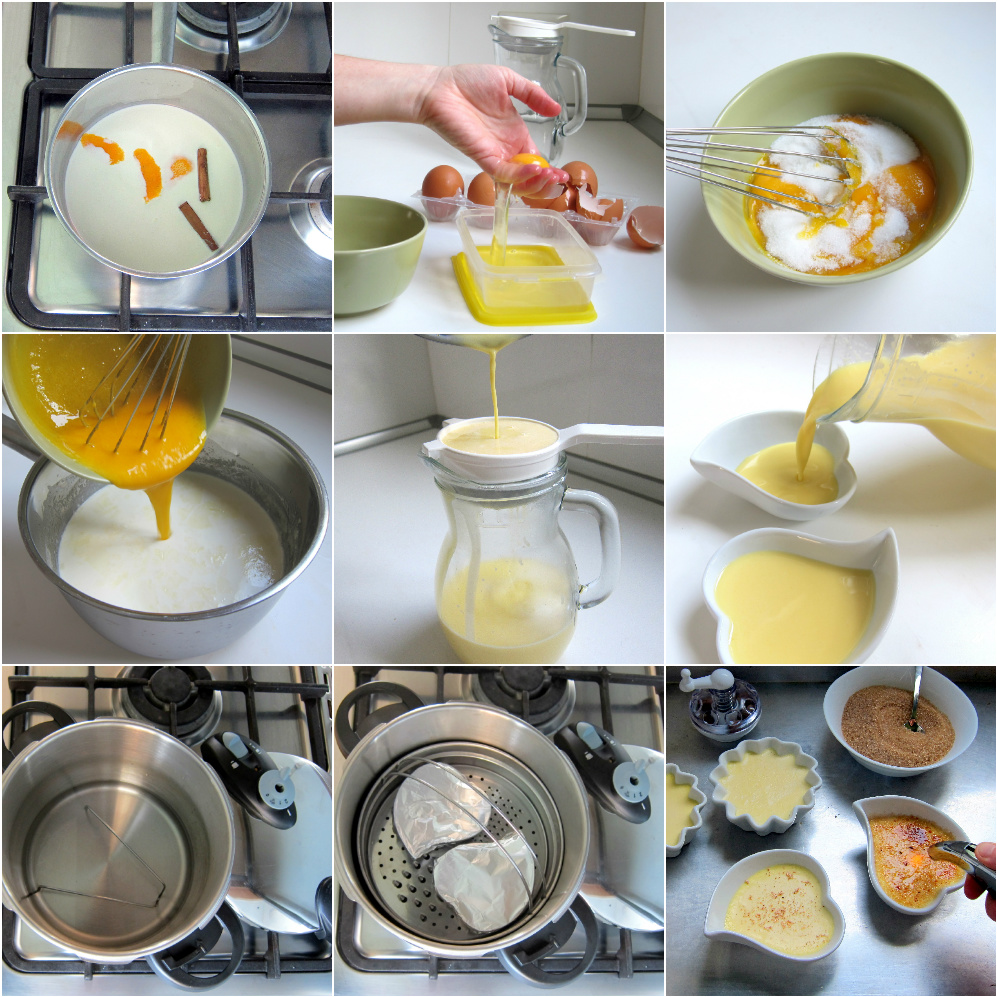
Photographs and recipes are the property of hippressurecooking.com and re-published with permission.Many thanks to Laura for her guest post and for today’s recipe. Come back tomorrow for a quick and easy pressure cooked pasta dish!Have you ever tried cooking using a pressure cooker? Have you had any triumphs or disasters?!
Hi Ren, and all.
I want to caution everyone to check to see if they can select “High” and “Low” pressure before trying this recipe.
I was heartbroken to read on Twitter that one of Ren’s followers had horrible “scrambled” eggs when trying to do this recipe in her “one pressure” cooker. HOWEVER, not all “one pressure” cookers cook at high pressure. Some may cook only at “Low” pressure. The only way to be sure is to check your Instruction Manual or flip over the bottom and match-up the Kpa, Bar or PSI to what is on this table:
http://www.hippressurecooking.com/p/cooking-times.html
Feel free to email, facebook or tweet me if you need any pressure cooking question, answered!!!
Ciao,
L
Hi Laura, thanks for leaving a comment and for updating us! I think my pressure cooker has a low setting, so I will try it and see. Don’t worry, these things happen and I think pressure cooking takes some practice! x
Hahaha.. yes, they make the recipe take at least for times as long to make! If using veggies, for example, they have to be carefully chosen and cut. Since I don’t have a “fake kitchen studio” my real kitchen has to be spotless!!! Hard to do while in the middle of a shoot you need to cook lunch for the family or… if you step away for a second dear husband puts his empty coffee mug right in the middle of “the set”!!
The “glamour” shot has to be set-up even before I start cooking because once the food is ready, it’s ready and you have to shoot it right away otherwise it looks “old” fast! Since all my custards usually need to chill they are the easiest to shoot because I make them one day and then I have the “whole” next day to photograph the finished product.
I don’t to use any of those “professional” tricks (shoe polish, glycerne, other crazy stuff) because I want to eat the food. Hubby always gets the “display” plate, and sometimes my son will ask me to show him a photograph before I tell him what’s for dinner. Daughter is brutally honest with her limited 3-year old vocabulary.
I once pulled a chocolate truffle out of the fridge for my son to taste and he said “yuck” after just one look. But after he saw the photo.. he asked to try it!
The power of photography.
Ciao,
L
It’s exactly the same in my house, although there is usually food all over the place and lots of little hands poking in, but that’s all part of the fun! Pressure cooker at the ready!!! x
Ren, thank you again for doing a 3-day special on pressure cooking. You have helped me to see the beauty of the step-by-step photos and I will try to feature them more prominently in my recipes instead of shoving them at the end!
You are right… they tell a story of ease and simplicity – and that is as important as the “glamour” shot!!
Ciao,
L
Dear Laura, thank YOU so much! The step-by-step photos must take a long time to take and put together and it actually must make the process of cooking longer for you. They do say that all cookery books with step-by-step images are the longest and hardest ones to put together, so you are doing the job of a coookery book author on your blog with no extra help!
I am really going to enjoy experimenting and if I come up with any recipes of my own I will send them to you! Thank you again, ciao!
Oh how I love Creme Brulee. The photos are sweet torture. Love the step-by-steps 🙂
Yes me too, and I like that this one just has a sprinkle of sugar rather than a big thick later. The photos are awesome, Laura is very talented. x